
Explore The Best AI Websites & Tool
Your all-in-one toolkit for productivity, creativity, and development. Over 40 powerful tools to streamline your workflow.
SearchPydanticAI Review: Revolutionizing AI App Development
What is PydanticAI?
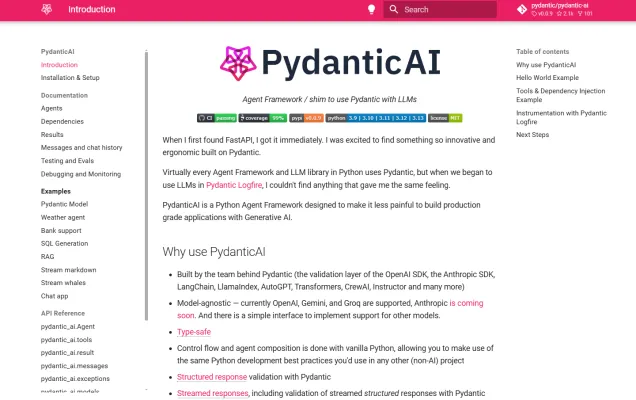
PydanticAI is an innovative Python Agent Framework designed to simplify the development of applications that leverage Generative AI. Created by the team behind the widely-used Pydantic library, it offers a model-agnostic approach, supporting various Large Language Models (LLMs) such as OpenAI, Gemini, and Groq. The framework's emphasis on type safety ensures data integrity through Pydantic's robust validation capabilities.
One of PydanticAI's standout features is its ability to facilitate control flow and agent composition using vanilla Python. This allows developers to apply familiar coding practices in AI project development, reducing the learning curve and increasing productivity. Moreover, the framework supports structured and streamed response validation, enhancing the reliability of interactions with AI models.
PydanticAI also introduces a unique, type-safe dependency injection system that aids in testing and iterative development. This feature, combined with integration options for monitoring applications through Pydantic Logfire, positions PydanticAI as a powerful tool for building robust, production-grade applications efficiently.
Features of PydanticAI
PydanticAI boasts a range of features that set it apart in the realm of AI development frameworks:
- Model Agnostic: The framework's support for multiple LLM providers, including OpenAI, Gemini, and Groq, with plans for Anthropic integration, offers developers the flexibility to choose the best model for their specific needs.
- Type Safety and Validation: Leveraging Pydantic's capabilities, PydanticAI ensures that LLM outputs conform to predefined data structures, minimizing runtime errors and enhancing overall data integrity.
- Structured and Streamed Responses: The framework supports both structured response validation and handling of streamed outputs, crucial for applications requiring real-time feedback or processing of large data volumes.
- Dependency Injection: PydanticAI's type-safe dependency injection system allows for modular workflows and easier testing, promoting better code organization and facilitating the integration of external APIs and databases.
- Logfire Integration: Seamless integration with Pydantic Logfire provides robust debugging and monitoring tools, enabling developers to track agent performance and refine their applications effectively in production environments.
How does PydanticAI work?
PydanticAI's model-agnostic architecture allows developers to integrate various LLMs, enabling the creation of versatile AI-driven solutions. The framework's emphasis on type safety, utilizing Pydantic for structured data validation, ensures that applications maintain data integrity and reduces debugging challenges.
Developers can create agents that manage complex workflows, interact with external APIs, and utilize dynamic system prompts to tailor responses based on user context. The framework's support for both structured and streamed responses enhances real-time interaction capabilities, making it ideal for building sophisticated customer support bots, interactive applications, and automation tools that respond accurately and intelligently to user queries.
Benefits of PydanticAI
The benefits of using PydanticAI are numerous and significant:
- Type Safety: Utilizing Pydantic's data validation capabilities ensures inputs and outputs conform to predefined schemas, minimizing errors and enhancing data integrity.
- Model Agnosticism: The ability to switch between various LLM providers without being locked into a single vendor offers unparalleled flexibility.
- Structured Response Validation: This feature ensures that responses from LLMs meet expected data formats, crucial for maintaining consistency in application outputs.
- Dependency Injection System: Promotes modularity and simplifies testing, making iterative development more efficient.
- Pydantic Logfire Integration: Aids in debugging and performance monitoring, providing valuable insights into application behavior.
These benefits collectively equip developers with the tools necessary to build reliable, production-grade AI applications with ease and confidence.
Alternatives to PydanticAI
While PydanticAI offers a comprehensive solution for AI application development, several alternatives exist that may be suitable for specific project requirements:
- Marshmallow: A popular data serialization and deserialization library for Python, ideal for defining complex data schemas and validating incoming data.
- Attrs: Focuses on reducing boilerplate code associated with class definitions, offering a lightweight option for managing class attributes.
- Cattrs: Builds on Attrs to facilitate the serialization and deserialization of data classes, providing flexibility in managing data inputs and outputs.
- Desert: Generates Marshmallow schemas directly from Attrs classes, bridging the gap between simplicity and structured validation capabilities.
- Fastjsonschema: Designed for high-performance JSON validation, ideal for applications where speed and efficiency are critical in large-scale data processing.
Each of these alternatives offers unique features that can enhance data processing capabilities, allowing for flexible and efficient handling of structured outputs in applications.
In conclusion, PydanticAI represents a significant leap forward in AI application development. Its combination of type safety, model agnosticism, and powerful features like dependency injection and structured response validation make it an attractive choice for developers looking to build robust, scalable AI applications. While alternatives exist, PydanticAI's comprehensive approach and integration with the popular Pydantic library position it as a top contender in the field of AI development frameworks.
Trending

Gemini Models Review: Google's AI Breakthrough Explained
Explore Google's Gemini Models in our comprehensive review. Learn about their multimodal capabilities, long context windows, and industry applications. Discover AI's future!

ChatGPT's Windows App Challenges Office Software Dominance
OpenAI's latest move brings ChatGPT to Windows desktops, signaling a potential shift in how we interact with computers and process information. This strategic expansion could reshape the enterprise software landscape.
ElevenLabs' Reader App Releases Globally with Multilingual text-to-Speech Support
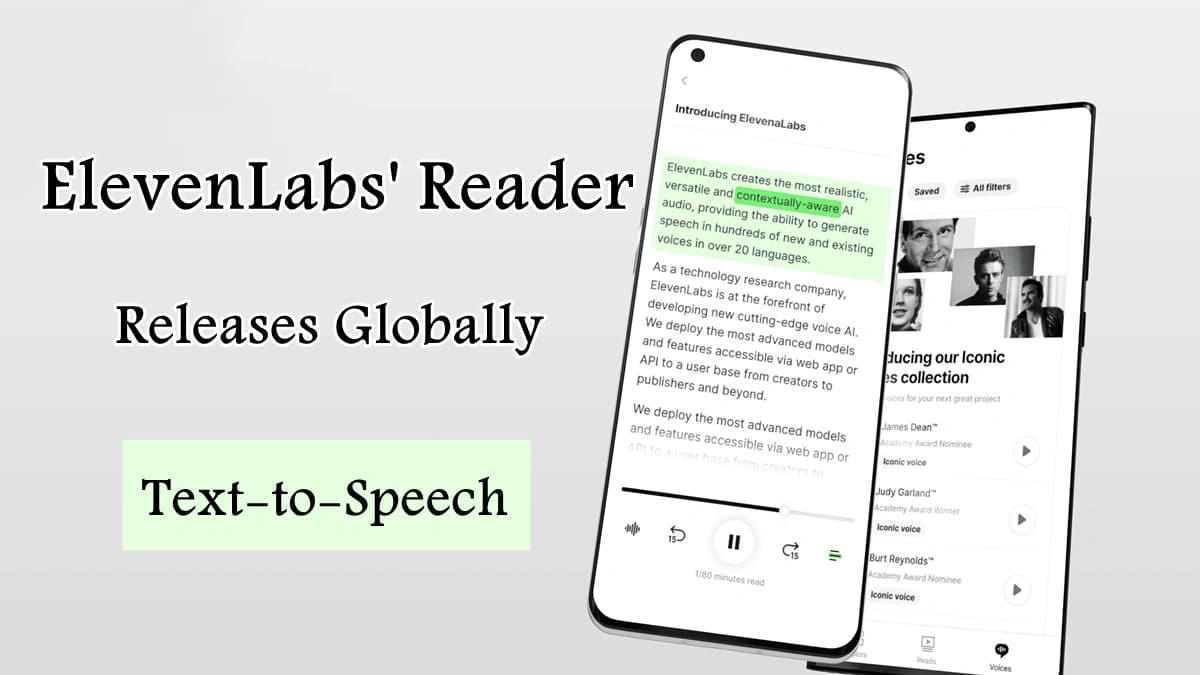
ElevenLabs expands its AI-powered text-to-speech Reader app worldwide, now supporting 32 languages and offering enhanced voice options for a more immersive listening experience.

Nanonets Review: AI-Powered Document Processing Solution
Explore our comprehensive Nanonets review. Learn how this AI-driven platform revolutionizes document processing and workflow automation. Discover features and benefits now!
How to Use ttsMP3.com: Free text-to-Speech Guide
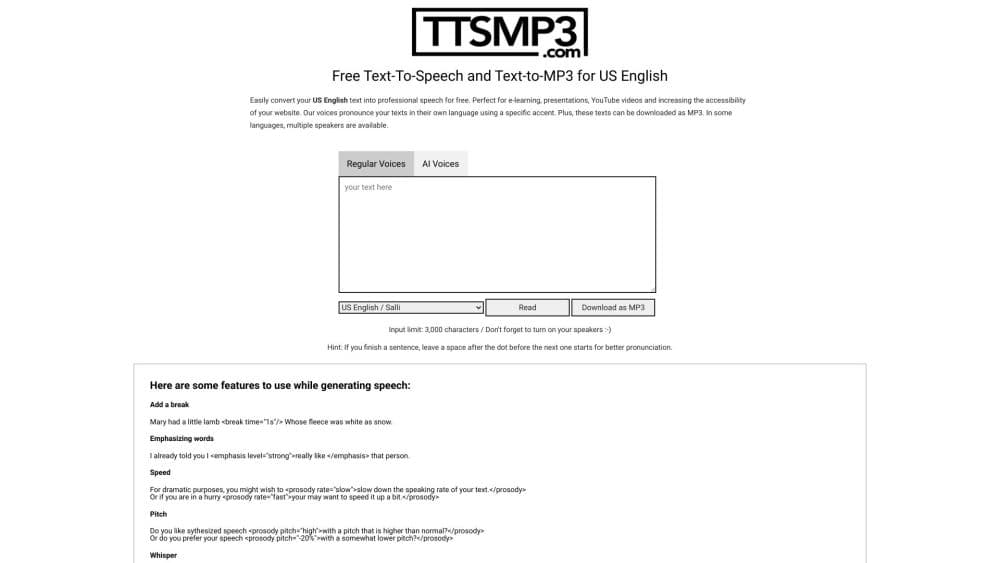
Learn how to use ttsMP3.com for free text-to-speech conversion. Discover tips, create an account, and explore various use cases in this comprehensive guide.